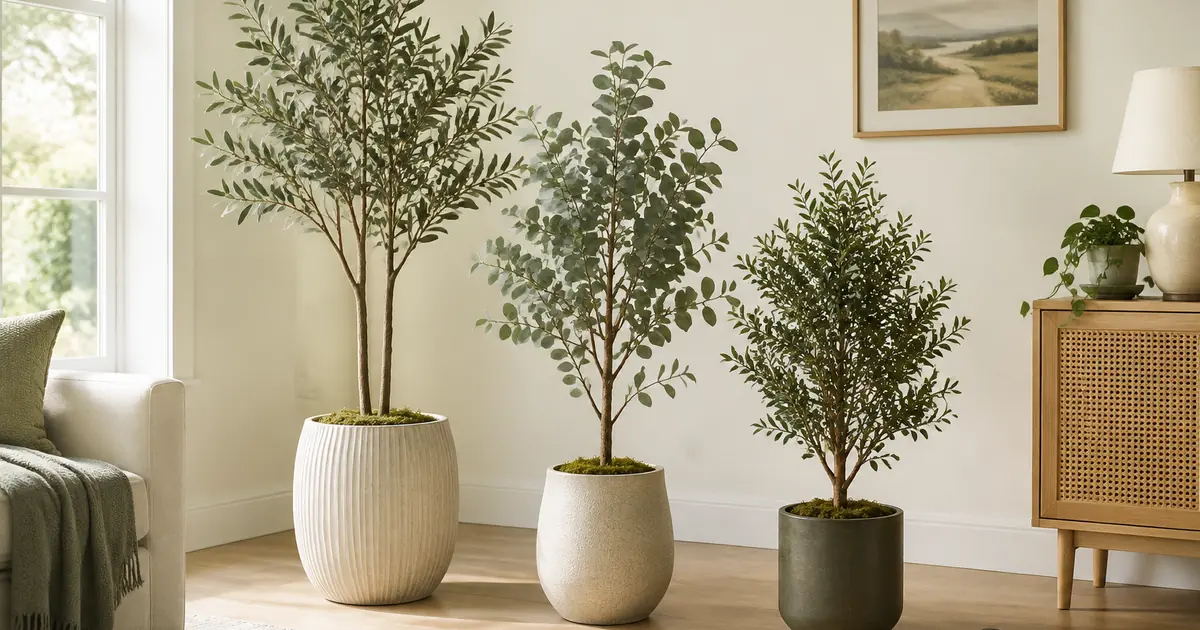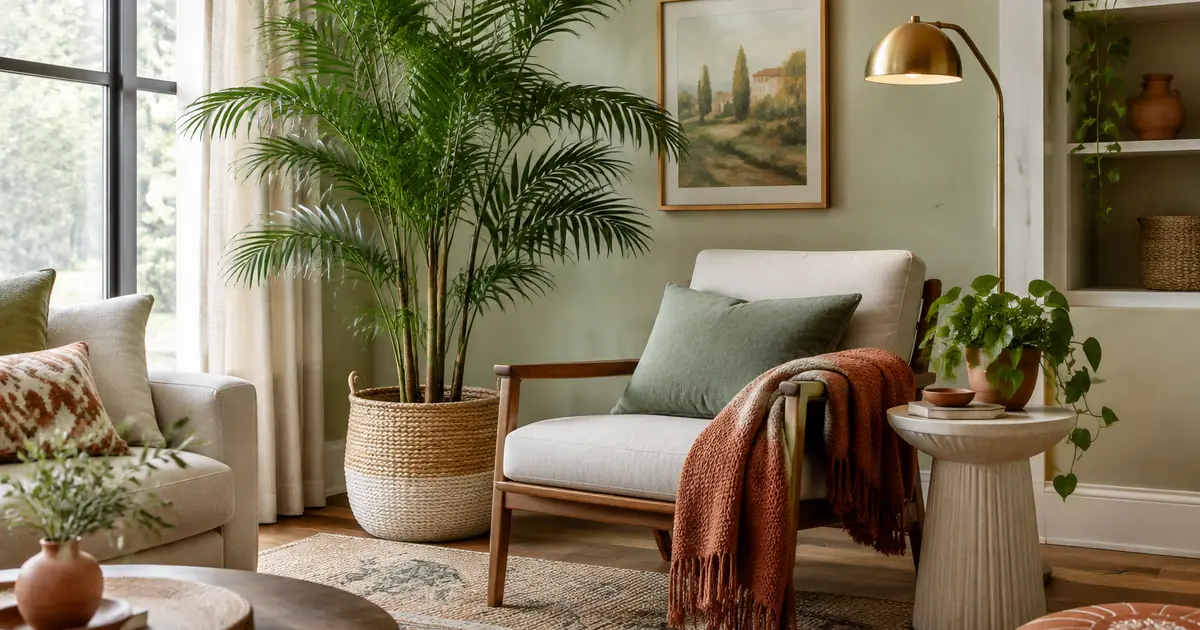
The real-versus-artificial debate usually gets argued on looks alone, which is a shame, because looks are the one category where a good faux tree and a healthy real tree tie. The real differences show up in your calendar, your budget and where you can put the thing. Here is the honest breakdown.
The five-year math
A quality artificial tree costs more up front than a small real plant, less than a mature real tree of the same size. A 5-foot real bird of paradise from a nursery can run well past the price of our 5' artificial version, and then it needs pots, soil, fertilizer and occasional replacement if it struggles.
What real plants quietly add to the bill
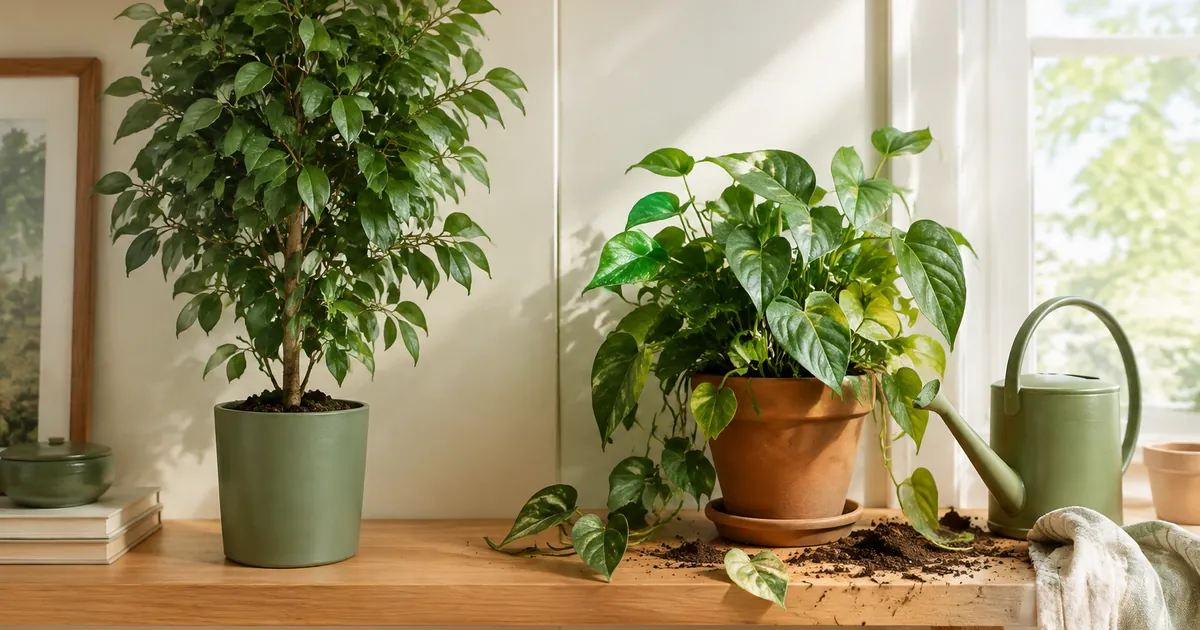
Potting mix refreshed every year or two, fertilizer, pest treatments when fungus gnats or spider mites show up, grow lights for dark corners, and replacement costs when a plant outgrows its spot or simply dies. None of these are huge alone. Over five years they routinely double the sticker price.
What artificial trees add
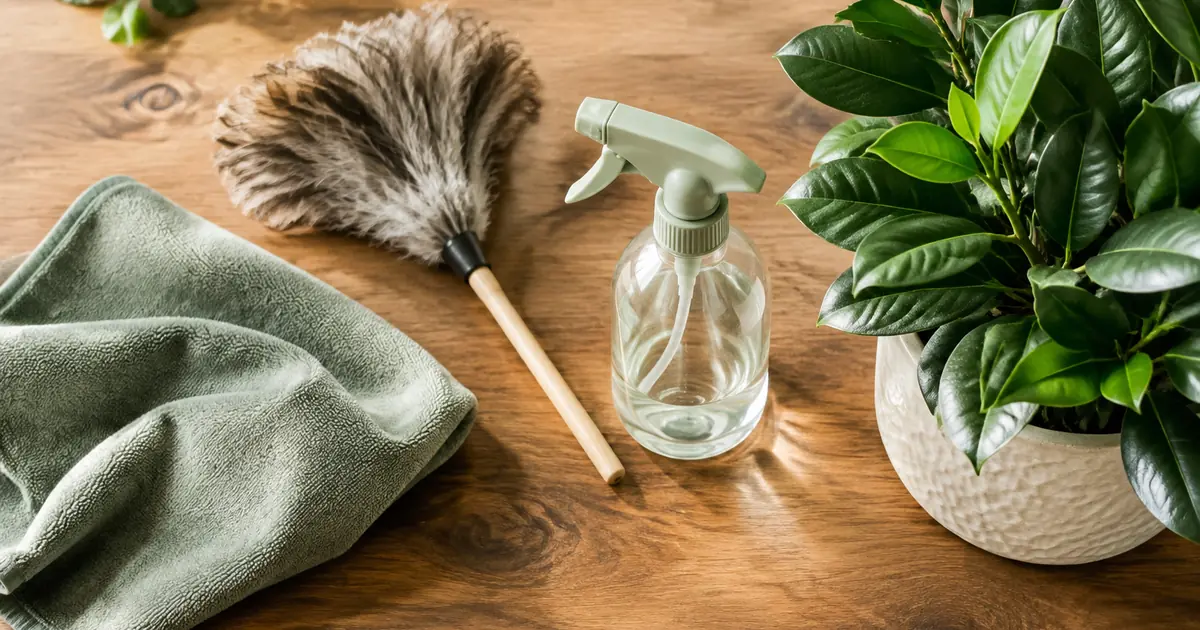
Almost nothing. A feather duster and ten minutes a month. There is no repotting, no soil, no replacement cycle. The Paradise Palm you buy today looks the same in year five, which is either a feature or a boring fact, depending on how much you enjoy plant drama.
The time cost, honestly compared
A real tree in a bright window wants watering once or twice a week, more in summer. It wants its leaves dusted too, because dusty real plants look worse than dusty fake ones. It wants rotating so it does not lean. Call it 20 to 30 minutes a week, plus someone to water it when you travel.
An artificial tree wants a quick dust when you think of it. That is the whole routine. If you have ever come home from a two-week trip to a crispy ficus, you already understand the appeal.
Where each one can live
This is where artificial wins by default. Real plants need light, so dark corners, interior bathrooms and north-facing rooms are off limits. Artificial trees go anywhere: that dim hallway, the windowless office, the corner of a basement family room. If your home has more corners than sunlight, faux is not the compromise, it is the only option that works.
Pets, kids and allergies
Many real favorites are toxic to cats and dogs, which turns every new leaf into a small worry. Artificial trees remove that calculation entirely. No toxic leaves, no fertilized soil for a curious dog to dig in, and no pollen for allergy sufferers. The trade is that a determined puppy can chew a faux trunk, so keep young pets supervised around anything new.
The environment question: humidity, heat and light
Real plants have opinions about your home. They sulk over dry radiator air, drop leaves in winter drafts, and brown at the tips when humidity drops. An artificial tree is indifferent to all of it, which quietly expands where you can decorate: above a radiator, beside an air vent, in a sunroom that hits 90 degrees in July, in a basement apartment with two small windows. If your home runs hot, dry or dark, that alone can decide the debate.
Size up over time, not all at once
One more practical point: you do not have to furnish every room in one order. Start with the room where you spend the most waking hours, live with the tree for a month, and let it teach you what the next room needs. Most people find their second purchase is either a matching pair for the entry or a smaller tabletop piece for the kitchen, and knowing which, before ordering, is worth more than any bundle discount.
Where real plants still win
Credit where due. Real plants produce new growth, which is genuinely satisfying. They change with the seasons. Some, like true Norfolk pines, carry a scent and a tradition that matters to people, especially in December. If gardening is your hobby rather than your chore, none of the math above matters, the way cost-per-use does not matter to someone who loves cooking.
Our honest recommendation
Go real if you enjoy the routine and your home has the light. Go artificial if your corners are dark, your travel schedule is full, your pets eat everything green, or you simply want the look without the labor. Most homes we see end up hybrid: one or two statement real plants in the bright spots, and artificial trees everywhere else.
If that hybrid approach sounds like you, start with the piece for your hardest corner. A Norfolk pine by the sofa or a flowering bougainvillea in the entry will show you within a week how little you miss the watering can.