When an artificial plant looks fake, the plant is rarely the problem. Almost every "obviously fake" tree we have ever seen was betrayed by one of seven fixable mistakes. Check your own corners against this list.
1. The pot is too small
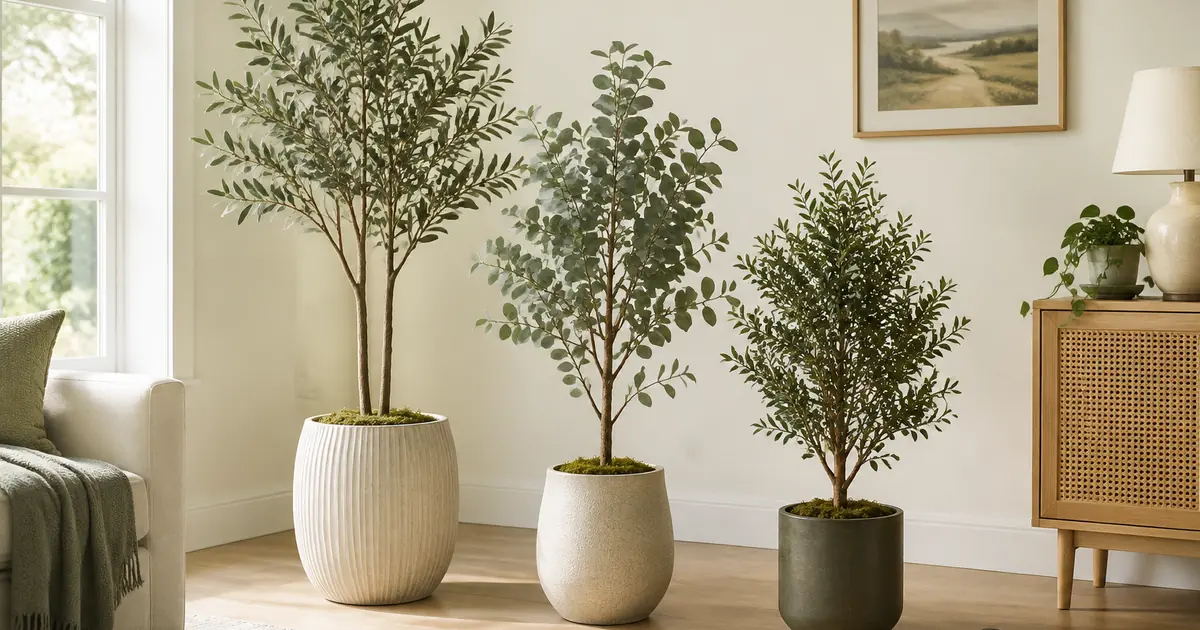
A full 5-foot tree balanced in a pot the size of a coffee mug looks like a broomstick, no matter how good the foliage is. The pot should be about one-third the visual height of the tree. If yours came in a nursery pot, drop it into a decorative planter sized for it, and fill the gap with moss or decorative stone. Every tree we sell, from the palm to the bird of paradise, is proportioned to its pot for exactly this reason.
2. It sits in the wrong spot for its style
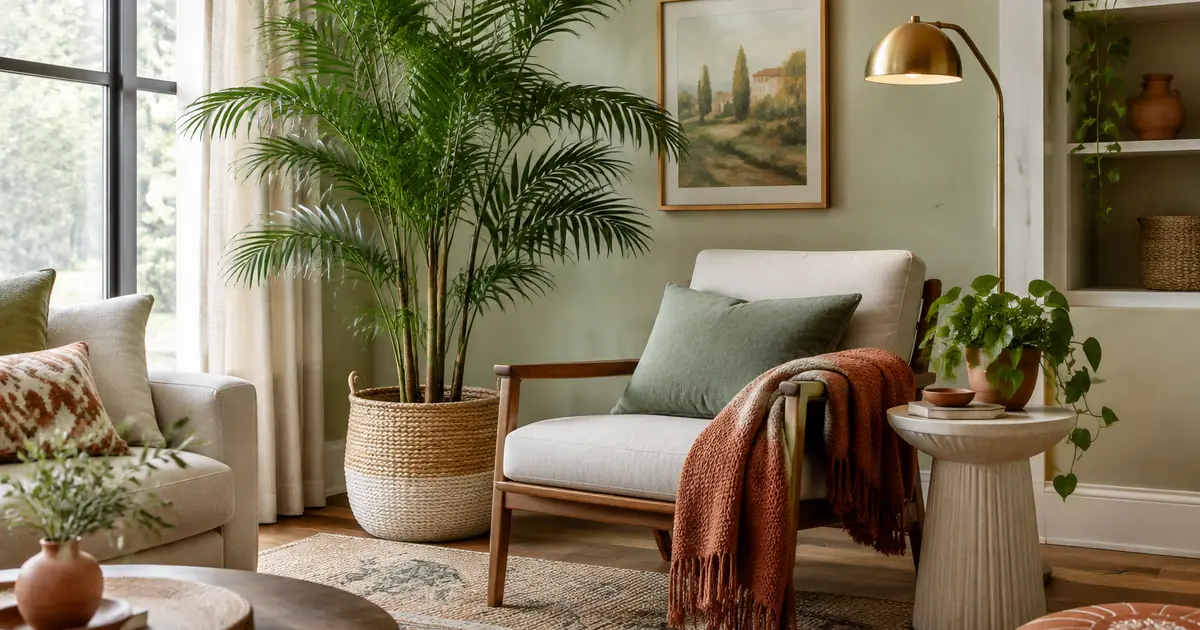
A tropical palm in a formal dining room, a delicate pine lost in an industrial loft: species sets mood. Match bold leaves to bold rooms and soft needles to soft rooms. If a tree feels off in a space, try it in another corner before blaming the tree.
3. Nobody ever dusts it
This is the big one. Dusty faux foliage is the single most common reason artificial trees read as fake. Real plants get dusted because people are already watering them; faux plants get forgotten. Ten minutes a month with a feather duster fixes it. Our full cleaning guide covers the routine.
4. Unshaped branches
Straight out of the box, branches point in shipping directions. Real growth fans out in a spiral and tips upward. Five minutes of bending each branch at its base transforms the silhouette. If your tree has never been shaped, do it today; it is the fastest upgrade in faux plant care.
5. Perfect symmetry
Two identical trees flanking a fireplace indoors looks like a hotel lobby. Outdoors by a front door, symmetry is classic; inside, it is stiff. Indoors, offset pairs or use a single tree with a smaller plant nearby. The exception that proves the rule: matching Norfolk pines on a covered porch, where symmetry reads as welcoming.
6. Too low, or floating in the corner
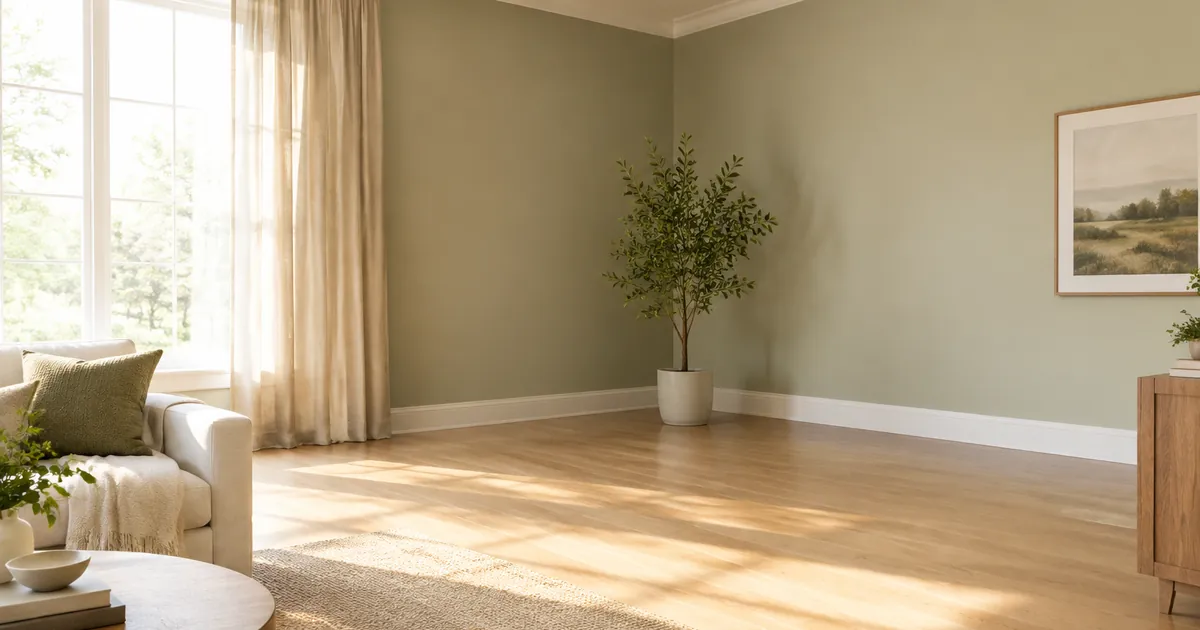
Height placement has two failure modes. A tall tree under a low ceiling feels like pressure. A short tree in a big corner disappears entirely. The rule: the tree's top should sit at least a foot below the ceiling, and its spread should cover about a third of the corner's width. Measure before buying; our buying guide has the numbers.
7. Forgetting the ground layer
Visible foam or bare potting material at the base breaks the illusion instantly. Cover it with moss, river stone, bark mulch or a planted-looking ground cover. This two-dollar fix does more for realism than most upgrades people spend twenty dollars on.
Two more questions we hear constantly
Is it obvious my plant is artificial?
Only when one of the seven mistakes above gives it away. Guests who ask whether a tree is real are responding to placement, light and dust, not to the foliage itself. Fix the styling and the question disappears.
Can I mix artificial and real plants in the same room?
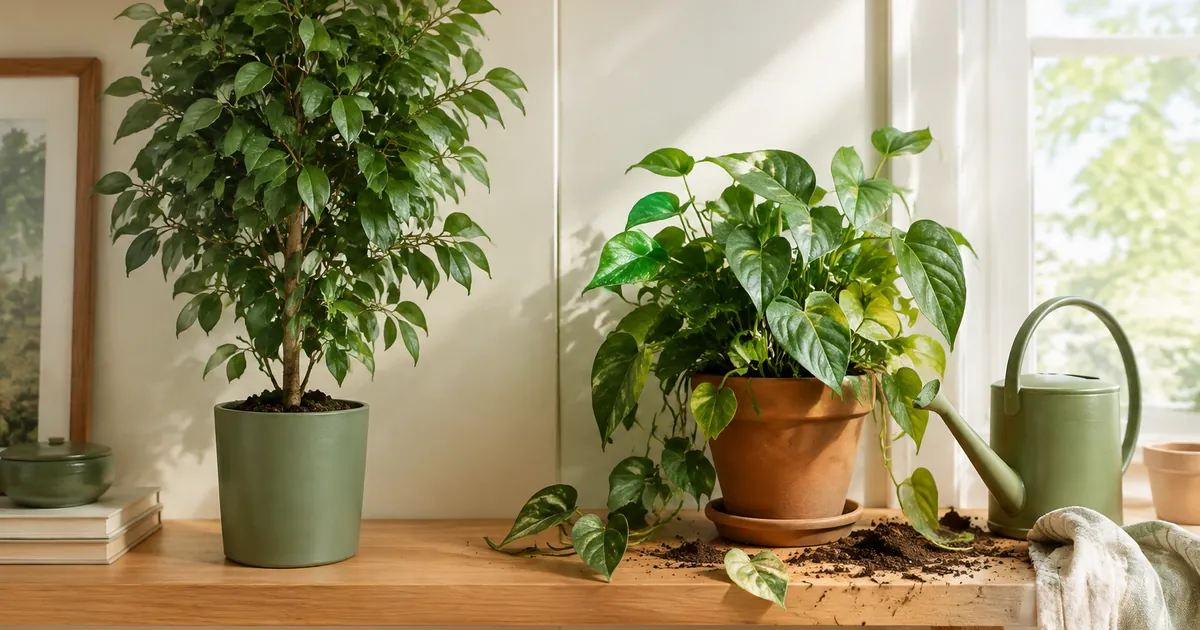
Yes, and it is the best-looking approach for most homes. The trick is matching leaf tone: a blue-green faux eucalyptus next to a yellow-green pothos reads as mismatched, while similar greens read as one collected grouping. Put the real plants where the light is and the faux ones everywhere else.
Bonus: the questions we hear most
Do artificial trees look fake in photos?
Shaped, dusted, properly potted trees photograph beautifully, which is why hotels and restaurants use them everywhere. The three fixes above are the whole difference.
Can I put one on a covered porch?
Yes, out of direct rain and harsh afternoon sun. Rotate it monthly so any sun exposure evens out.
How long should one last?
Indoors, decades. The foliage does not wilt or grow, so the only wear is dust and sun, both manageable.
What about storage closets and basements?
These are the rooms where artificial plants outperform everything else, because real plants cannot survive there at all. A tree by a basement TV or in a dim hallway solves the "dead corner" problem permanently. Just keep it away from damp walls and give it the same monthly dusting.
How do I keep pets from knocking one over?
Weight the pot with decorative stone, choose a wider-based planter, and place the tree out of the main runway between rooms. A deterrent spray on the lower leaves ends most chewing curiosity within a week.
Start with a tree proportioned to avoid most of these mistakes from the box: browse the full collection, or talk to us about a custom build for a tricky corner.